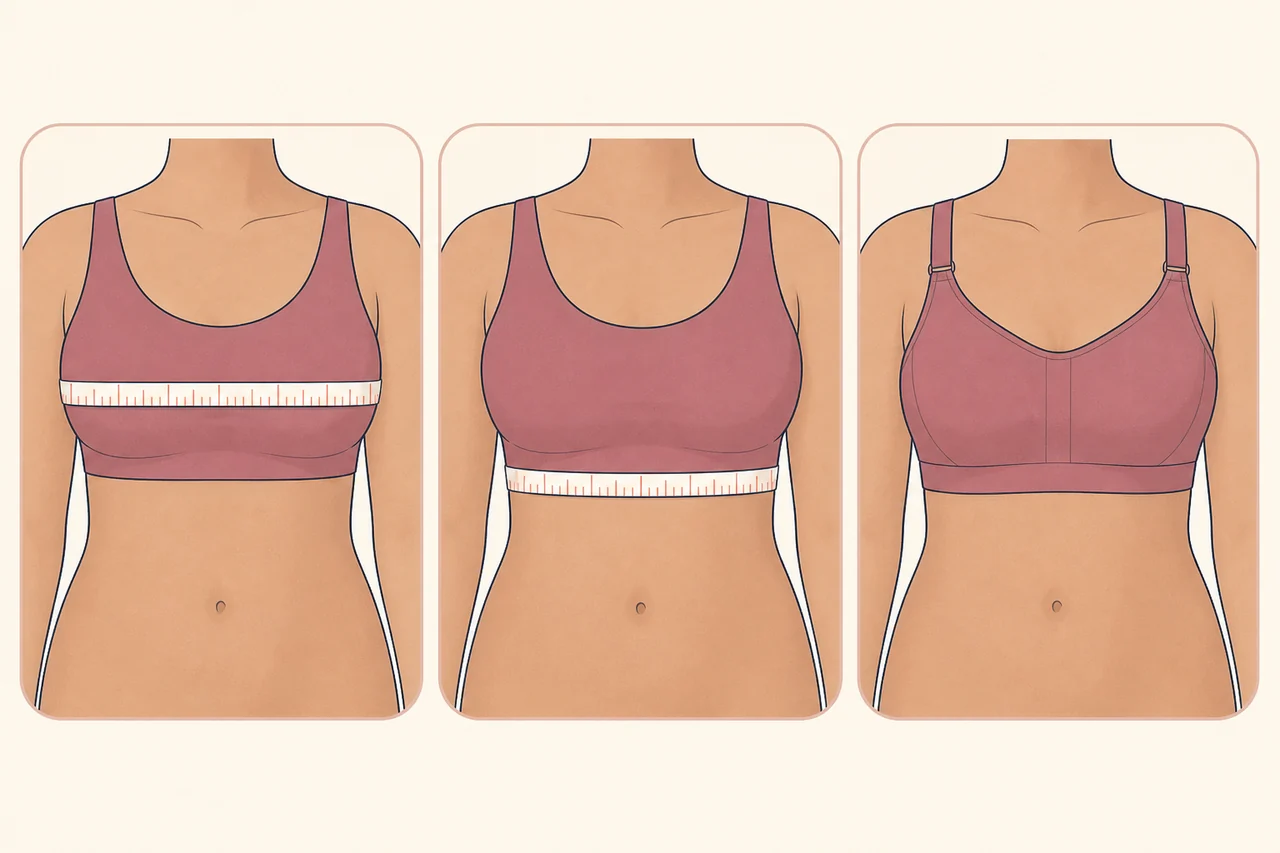
Choose the sizing language before reaching for the tape
Bra labels are conventions, not direct anatomical measurements. In the US branch, the band field means an already selected even label from the supported guide; it does not ask for a raw rib-cage circumference. The cup row is chosen from the difference between that label and a whole-inch circumference taken around the fullest bust. In the Wacoal Japan branch, the band is instead selected from explicit underbust intervals in centimetres, while the cup comes from the top-bust minus underbust interval. Mixing the first method's band label with the second method's underbust tape value would create a plausible-looking but semantically wrong answer.
Select the method that matches the chart you actually intend to shop. If the tape is marked in the other unit, use the unit conversion calculator for the measurement before opening the table; do not convert a finished 34D label as though 34 were simply a length. Cup progressions, double-letter conventions, label order, and product grading can differ by system. The separate known-size converter on the workbench is therefore a reference table of labels to try, not proof that nominal equivalents have identical wires, cup volume, or construction.
Repeatable tape placement matters more than extra decimals
Use a flexible tape on bare skin or thin, unpadded clothing, and record the circumstances so a later measurement can be repeated rather than guessed.
- Establish the method-specific band basis
For Wacoal Japan, place the tape directly below the bust, level around the torso, firm but not compressing tissue, and enter centimetres. For the US guide, enter the supported band label you have already selected under that guide; the workbench deliberately does not turn raw underbust into a US label behind the scenes.
- Measure the full or top bust on one horizontal path
Pass the tape around the fullest points without pulling the breasts inward or allowing the back of the tape to sag. Stand neutrally and breathe normally. Research shows that respiratory state and measurement procedure can move the calculated result, so consistency is more defensible than measuring to a fraction the table never uses.
- Recheck an unexpected difference before classifying it
Repeat both circumferences once, preferably in front of a mirror or with help keeping the tape level. A negative difference, unsupported interval, or abrupt change from a familiar label calls for a new measurement or a fitter—not an invented cup beyond the cited chart.
Two worked labels demonstrate two different rules
The examples are useful only inside their named tables; they are not interchangeable recipes for the same worldwide size.
US entered-band example: 34 and 36 inches
With an existing band label of 34 and a full bust of 36 inches, the difference is two inches, which the cited US guide maps to B; the starting label is 34B. The basic calculator can independently verify 36 minus 34, but only the declared cup table supplies the letter.
Wacoal Japan example: 72 and 87 centimetres
An underbust of 72 cm falls in the published 70-band interval, and a 15 cm top-bust difference falls in its C interval. Wacoal writes the result cup first as C70. The arithmetic difference is transparent, while the interval boundaries and label order remain properties of that Japanese table.
Why neither example settles another brand
A label can lead to different wire widths, cup depths, strap positions, stretch, and coverage across manufacturers or designs. Use the target seller's current chart and return policy, and expect a sports bra, moulded cup, plunge, or post-surgical garment to require a different trial even when the printed label matches.
The fitting-room check is part of the answer
- Fasten a new bra on a comfortable setting and check that the band remains level rather than climbing the back. It should feel secure without pain, numbness, broken skin, or restricted breathing.
- Confirm that breast tissue is contained without persistent spilling or empty gaping, the centre and wires sit appropriately for the design, and straps provide comfort without carrying the entire load. Adjusting straps cannot rescue a fundamentally unsuitable band or cup shape.
- Try nearby labels and sister sizes within the same brand when the cup feels close but the band does not. Sister sizing changes both band and cup designation; it is a fitting experiment, not evidence that every label in the row has the same construction.
- Seek a qualified fitter or clinician for persistent pain, skin injury, a new lump, discharge, sudden asymmetry, post-surgical needs, pregnancy-related change, or any health concern. A shopping calculator cannot evaluate breast symptoms or prescribe support.
Keep garment fit separate from body-shape labels
Bust circumference is only one loop around a three-dimensional body. Equal circumferences can accompany different breast roots, projection, spacing, torso contours, and tissue distribution, which is why the try-on remains decisive. The apparel proportion calculator compares upper, waist, and hip circumferences for a separate silhouette shorthand; it cannot validate a bra cup and should not be used to infer one.
Treat the saved result as a compact shopping note: method, measurement date, inputs, starting label, brand, model, and what happened during the fit check. Re-measure after a meaningful body change or when familiar garments fit differently. That record is more useful than presenting one calculated label as a permanent personal attribute, and it preserves the most important boundary: sizing assistance is not medical assessment.